Nearshoring Boom: Why Everyone Is Talking About U.S.-Mexico Border Real Estate (And You Should Too)
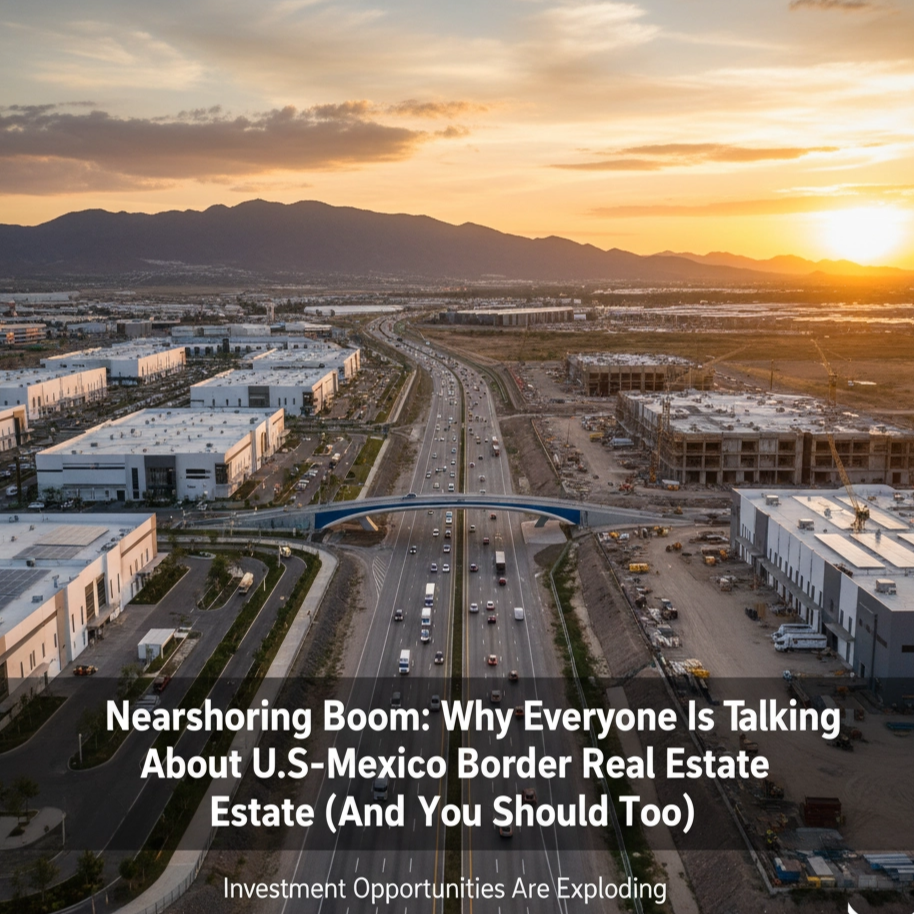
If you've been paying attention to real estate markets lately, you've probably heard the term "nearshoring" thrown around more than a piñata at a quinceañera. But here's the thing: this isn't just another buzzword. The nearshoring boom is literally reshaping the entire U.S.-Mexico border region, creating what might be the biggest real estate opportunity we'll see in our lifetime.
Let me break down what's happening and why you should be paying attention, porque this train is moving fast.
What Exactly Is Nearshoring (And Why Should You Care)?
Nearshoring is basically companies deciding to move their manufacturing and operations closer to home instead of keeping everything in far-off places like China. Think of it as the business world's version of wanting to live closer to your family: sometimes distance just isn't worth the hassle anymore.
For the U.S., this means Mexico has become the hot new destination. And when I say hot, I mean scorching. We're talking about over $170 billion in investment projects announced between January 2023 and August 2024 alone. That's not pocket change: that's economy-changing money flowing into border communities.
The Perfect Storm That Created This Opportunity
Several things happened all at once that made this boom inevitable:
Supply Chain Wake-Up Call: COVID-19 showed everyone what happens when your supply chain stretches halfway around the world. Companies learned the hard way that having everything manufactured in Asia meant one shipping delay could shut down their entire operation.
Rising Costs in China: Labor costs in China aren't what they used to be. Mexico's competitive wages and skilled workforce suddenly started looking pretty attractive.
USMCA Benefits: The trade agreement between the U.S., Mexico, and Canada made doing business across borders smoother and more profitable.
But here's the kicker: geography is destiny. Goods manufactured on the U.S.-Mexico border can reach any point in the United States in about 24 hours. Try doing that from Shanghai.
Where the Magic Is Happening: Border Market Explosion
The numbers don't lie, and they're pretty incredible. Over the past two years, just the El Paso and Laredo markets combined captured over 5% of all U.S. industrial leasing. Their historic average? About 1%.
That's like a baseball player going from batting .100 to .500 overnight.
Even more impressive: these markets have delivered a 5-year average annual return of 22% compared to the national average of 15%. While national industrial returns declined by 4% in the past year, El Paso and Laredo actually gained 1%.
Mexico's foreign direct investment hit a record $36.06 billion in 2023, and guess where a lot of that money is going? That's right: real estate development along the border.
The I-35 Corridor: The New Silk Road
If you want to understand where the action is, just follow Interstate 35 from Laredo up through Dallas-Fort Worth. This stretch of highway has become North America's most important trade corridor, and real estate developers are scrambling to build along it.
Laredo is already the busiest inland port in the United States, which is pretty incredible when you think about it. It's not on the ocean, but it handles more trade than many coastal ports. All those trucks carrying goods from Mexico need somewhere to unload, store, and redistribute their cargo.
That's where the real estate opportunity comes in. Warehouses, distribution centers, manufacturing facilities: they're all in massive demand. Industrial vacancy rates in Dallas-Fort Worth have dropped below 10%, creating what we call a "tight market" (which is great news if you own the properties).
Why Border Markets Are Still Undervalued
Here's something that might surprise you: despite all this growth, U.S. border markets are still trading at a discount. Cap rates in El Paso and Laredo are about 100 basis points higher than the national average, which means higher income returns for investors.
Some of this discount exists because these markets are less liquid and don't have the long track record of established markets like Los Angeles or New York. But for smart investors, that's exactly the opportunity. You're getting better returns in markets that are just getting started.
The Challenges Nobody Talks About
Look, I'm not here to blow sunshine. There are real challenges that could affect this boom:
Policy Uncertainty: With changing administrations come changing policies. The Trump administration's return has created some uncertainty about trade relationships and tariffs that could impact nearshoring decisions.
Infrastructure Strain: All this growth puts pressure on existing infrastructure. Roads, ports, utilities: they all need upgrades to handle the increased volume.
Competition for Land: As demand increases, so do land prices. What was affordable two years ago might be out of reach today.
Labor Market Tightness: Everyone wants to build, but there's only so much construction labor available.
But here's my take: these challenges are growing pains, not deal-breakers. Smart investors figure out how to work around obstacles, not wait for perfect conditions.
What This Means for Your Investment Strategy
If you're thinking about real estate investment, the border region offers several compelling opportunities:
Industrial Properties: Warehouses, distribution centers, and manufacturing facilities are in high demand. The fundamentals are solid: companies need space to store and process goods flowing from Mexico.
Residential Development: Workers need places to live. Border communities are experiencing population growth as jobs follow the industrial development.
Mixed-Use Projects: Communities need retail, restaurants, and services to support growing populations.
The Global Context That Makes This Different
This isn't just about U.S.-Mexico trade. Even Chinese companies are moving operations to Mexico to maintain access to the U.S. market while avoiding potential tariffs. That's how powerful this trend has become.
Mexico has the opportunity to transform from just a manufacturing location to an innovation hub. For investors, this means getting in on the ground floor of what could be a decades-long transformation.
Why Timing Matters Now
Real estate cycles don't wait for perfect conditions. The companies making nearshoring decisions today are the ones that will drive demand for the next decade. The infrastructure being built now will serve those companies.
Interest rates, policy changes, and economic conditions will always create uncertainty. But demographic trends, geographic advantages, and supply chain necessities create the fundamental demand that drives real estate returns over time.
The Bottom Line
The nearshoring boom represents a rare alignment of economic forces, geographic advantages, and policy incentives. For investors willing to understand the market dynamics and accept some uncertainty, the U.S.-Mexico border region offers opportunities that don't come around often.
Is it risk-free? Absolutely not. Is it worth serious consideration? Absolutely yes.
The companies moving operations to Mexico aren't making short-term bets: they're making 10-20 year commitments. The real estate infrastructure needed to support them will be valuable for just as long.
At Grupo Pereda, we've been watching these trends develop and helping investors navigate cross-border opportunities. Email us directly at director@grupopereda.com.
Because while everyone else is talking about this boom, smart investors are already positioning themselves to benefit from it.