Multifamily vs. Hospitality Assets: Which Is Better For Your Cross-Border Investment Portfolio?
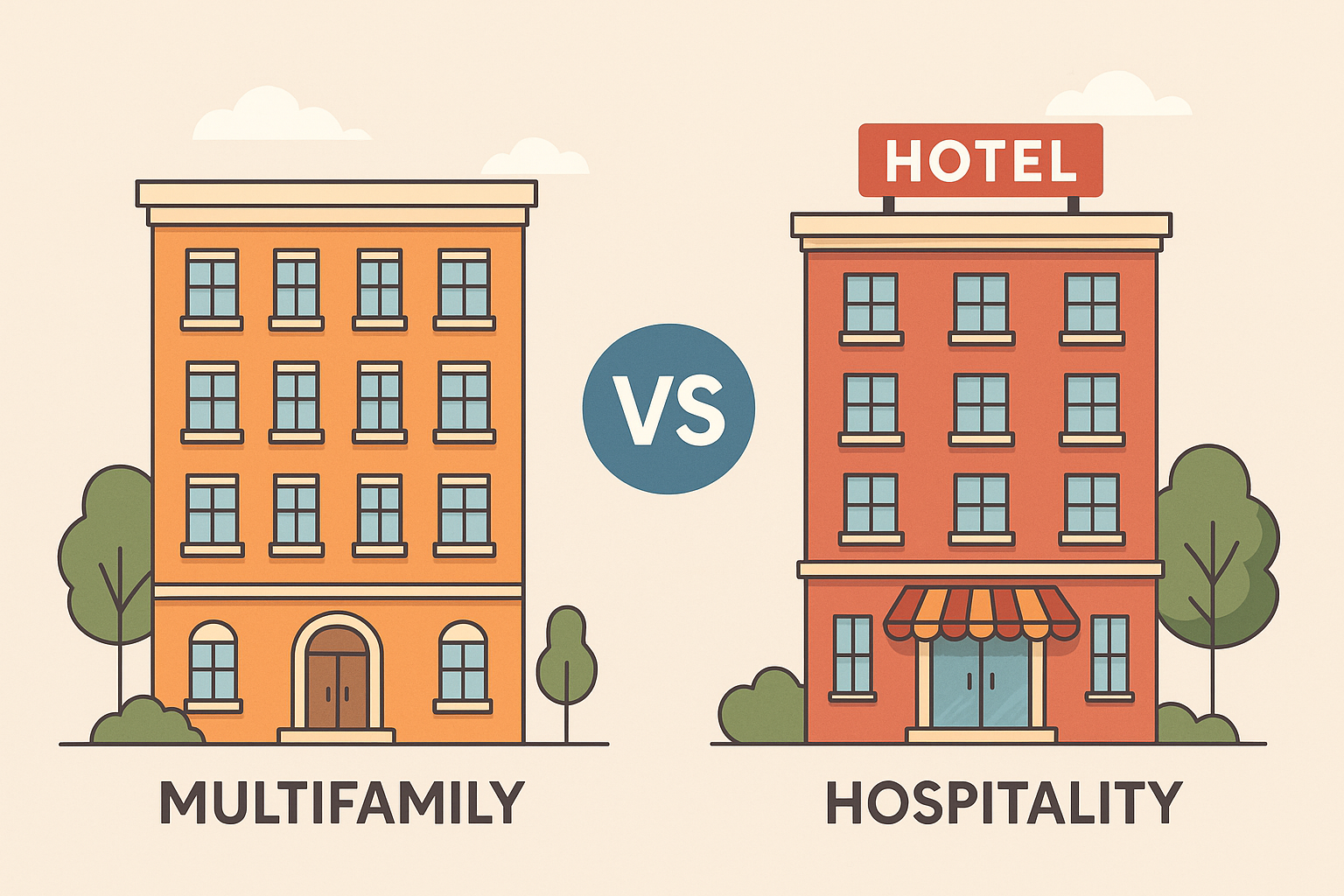
When you're building a cross-border investment portfolio between the U.S. and Mexico, one of the biggest decisions you'll face is choosing between multifamily and hospitality assets. Both offer compelling opportunities, but they serve completely different strategic purposes and come with distinct risk-reward profiles.
After working with countless investors navigating these waters, I can tell you that the "right" choice isn't always obvious. Some investors swear by the predictable cash flow of multifamily properties, while others are drawn to the dynamic revenue potential of hospitality assets. The truth? It depends on your goals, risk tolerance, and how hands-on you want to be.
Let's break down both asset classes so you can make an informed decision that actually fits your investment strategy.
The Multifamily Advantage: Stability in an Uncertain World
Multifamily properties are the tortoise in this race: steady, reliable, and built for the long haul. When you invest in apartments or residential complexes, you're betting on one of humanity's most fundamental needs: shelter.
Why Multifamily Makes Sense for Cross-Border Investors
The biggest advantage of multifamily investments is income predictability. With lease terms typically spanning 12 months or more, you can forecast your cash flow with remarkable accuracy. This is especially valuable when you're dealing with currency fluctuations between pesos and dollars: knowing your rental income helps you plan for exchange rate shifts.
Operationally, multifamily properties are relatively straightforward. Rent adjustments happen annually, not daily, which means less constant price management and fewer moving parts to monitor from across the border. You're not scrambling to adjust rates based on weekend demand spikes or special events.
The financing landscape also tends to favor multifamily investments. Banks understand the asset class, and the barrier to entry is generally lower than hospitality properties. You don't need as much liquidity upfront, making it easier to scale your portfolio across multiple markets.
The Multifamily Reality Check
But here's where multifamily shows its limitations: pricing rigidity. When inflation hits or market conditions shift rapidly, you're stuck with annual rent increases that might lag behind economic reality. While your costs are going up in real-time, your revenue adjustments are locked into an annual cycle.
This structural limitation means multifamily properties aren't always the best inflation hedge. When costs spike quickly: think maintenance, utilities, or property taxes: you can't immediately pass those increases to tenants like you could with daily hotel rates.
The Hospitality Hustle: Dynamic Revenue with Higher Stakes
Hospitality assets are the hare in our comparison: fast, agile, and capable of impressive sprints when conditions are right. Hotels, short-term rentals, and hospitality properties operate in a completely different universe from multifamily investments.
The Power of Pricing Flexibility
The game-changing advantage of hospitality assets is daily pricing control. When demand surges for a major event, conference, or holiday, you can adjust rates immediately. A hotel room that goes for $150 on a Tuesday can command $400 on a Saturday during peak season: try doing that with an apartment lease.
This pricing agility makes hospitality assets superior inflation hedges. When your costs increase, you can pass them through to guests almost immediately rather than waiting for lease renewal cycles. It's financial flexibility that multifamily simply can't match.
Revenue Diversification: Beyond Just Room Nights
Hospitality investments offer multiple revenue streams that multifamily properties lack. Beyond room bookings, you're generating income from:
Food and beverage operations
Event hosting and meeting spaces
Spa and wellness services
Parking and ancillary fees
Corporate partnerships and packages
This diversification can actually reduce risk compared to single-use properties, despite what conventional wisdom might suggest.
The Hospitality Challenge: Complexity and Capital
The flip side of all this flexibility? Operational complexity. Hotels require daily management of guest turnover, housekeeping operations, front desk service, and multiple revenue departments. You're essentially running a service business, not just collecting rent.
This complexity is magnified in cross-border investments. Managing a hotel from a different country requires either trusted local partners or sophisticated remote management systems. The learning curve is steep, and mistakes are expensive.
Capital requirements are also significantly higher. Hospitality assets demand more liquidity for acquisition and ongoing operations. You need deeper pockets and stronger cash reserves to weather occupancy fluctuations.
Cross-Border Considerations: The Mexico-U.S. Context
When you're investing across the U.S.-Mexico border, both asset classes present unique opportunities and challenges that don't exist in single-country portfolios.
Multifamily in the Cross-Border Context
Multifamily properties in border regions benefit from consistent housing demand driven by business relationships, family connections, and workforce mobility between countries. Cities like San Diego-Tijuana, El Paso-Juarez, and Laredo-Nuevo Laredo create natural demand drivers for residential properties.
The challenge lies in managing different regulatory environments, property management standards, and tenant expectations across borders. However, the stable nature of multifamily investments makes these challenges more manageable than in hospitality.
Hospitality's Cross-Border Potential
Hospitality assets can capitalize on cross-border business travel, family visits, and tourism flows between the U.S. and Mexico. The growing nearshoring trend is creating sustained demand for business-class accommodations in border regions.
However, hospitality investments are more sensitive to political tensions, border policies, and economic disruptions that can impact travel patterns between countries. The COVID-19 pandemic showed how quickly hospitality demand can evaporate when movement restrictions are imposed.
The Practical Comparison: What Really Matters
Let me cut through the theory and give you the practical comparison that matters for your investment decision:
Cash Flow Predictability: Multifamily wins hands down. You know what's coming in each month, making financial planning and debt service coverage much easier to manage.
Growth Potential: Hospitality takes this category. When everything clicks: strong demand, effective marketing, operational excellence: hospitality assets can significantly outperform multifamily properties.
Time Investment: Multifamily requires less day-to-day attention. Hospitality demands constant monitoring and optimization.
Capital Requirements: Multifamily has a lower entry point and ongoing capital needs. Hospitality requires deeper pockets for acquisition and operations.
Risk Profile: Multifamily offers lower volatility but potentially lower returns. Hospitality provides higher return potential with significantly higher risk.
Making Your Choice: Three Strategic Approaches
Based on working with investors across different risk profiles and investment goals, here are three approaches that make sense:
The Conservative Play: Start with Multifamily
If you're new to cross-border investing or prefer predictable returns, multifamily is your foundation. Build a stable base with apartment complexes or residential properties that generate steady cash flow. Once you understand the market dynamics and have established local partnerships, consider adding hospitality exposure.
The Growth Strategy: Lead with Hospitality
Experienced investors with strong operational capabilities and significant capital reserves might lead with hospitality assets. The higher complexity is offset by greater revenue potential and the ability to benefit from growing cross-border business activity.
The Balanced Portfolio: Mixed-Use Development
The most sophisticated approach combines both asset classes through mixed-use developments. Properties that integrate hospitality services with residential components create robust income streams from both nightly stays and long-term residents. These projects capture the benefits of both asset classes while providing natural diversification.
The Bottom Line for Cross-Border Investors
Your choice between multifamily and hospitality assets shouldn't be binary. Instead, consider them as complementary components of a diversified cross-border portfolio. Multifamily provides the stable foundation that supports more aggressive hospitality investments.
The key is understanding your own capacity: financial, operational, and emotional: for managing different types of complexity. Multifamily investments let you sleep better at night but might not maximize your growth potential. Hospitality assets can drive impressive returns but require constant attention and deeper expertise.
For most cross-border investors, the winning strategy involves starting with multifamily to establish market presence and local relationships, then gradually adding hospitality exposure as experience and capital allow. This approach balances growth potential with manageable risk while building the operational capabilities needed for more complex investments.
Remember, the "best" investment is the one that aligns with your goals, capabilities, and risk tolerance: not necessarily the one with the highest theoretical returns. ¿Listos para dar el siguiente paso? The key is making sure your investment strategy matches your real-world situation, not just your aspirations.
Email us directly at director@grupopereda.com